
-
 Free Shipping Over $250
Drolet Modular Hearth Pad System Extension
Vendor:DroletRegular price $135.00 USD -
 Free Shipping
Drolet 18" × 50" Tempered Glass Hearth Pad (10 mm)
Vendor:DroletRegular price $269.00 USD -

 Free Shipping
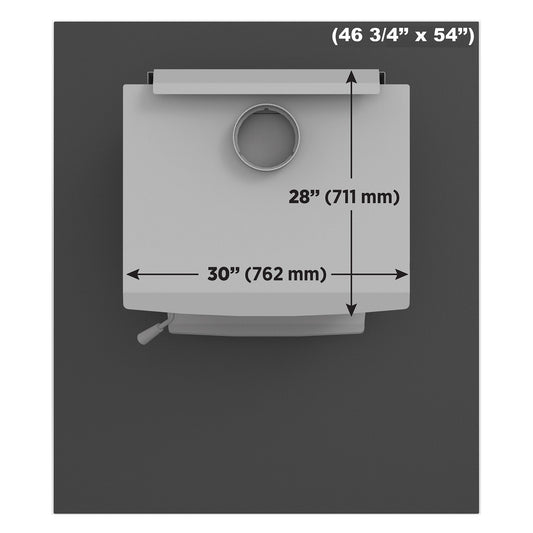
Drolet 46¾" × 54" Black Steel Hearth Pad
Vendor:DroletRegular price $285.00 USD -

 Free Shipping
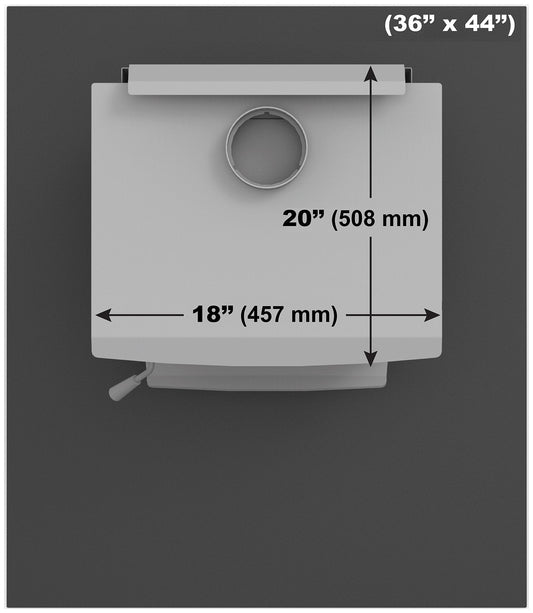
Drolet 44" × 36" Tinted Tempered Glass Hearth Pad (10 mm)
Vendor:DroletRegular price $299.00 USD -

 Free Shipping
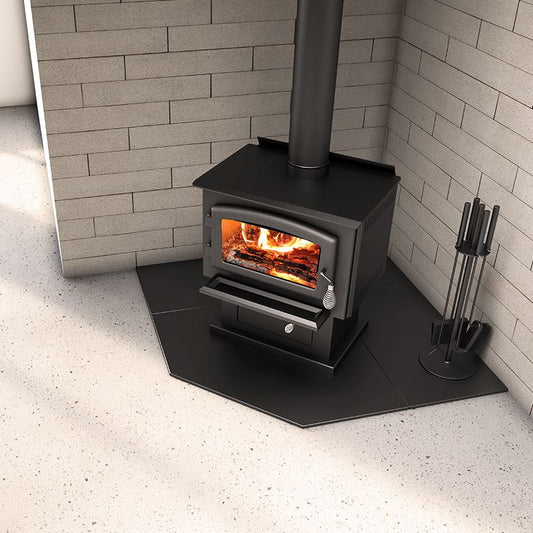
Drolet 54" Corner Black Steel Hearth Pad
Vendor:DroletRegular price $349.00 USD -

 Free Shipping
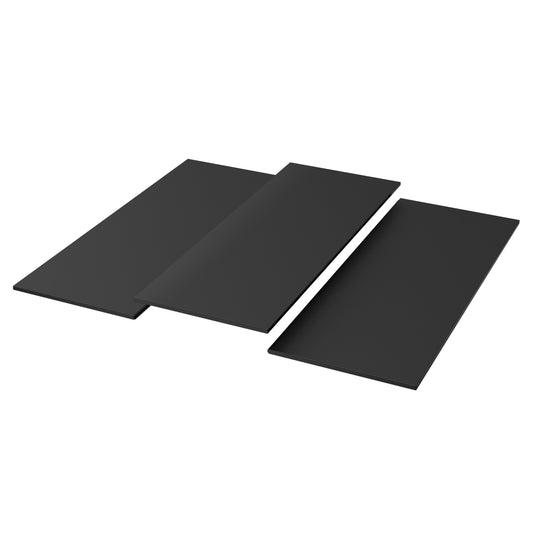
Drolet 54" × 46¾" Modular Hearth Pad System
Vendor:DroletRegular price $369.00 USD -

 Free Shipping
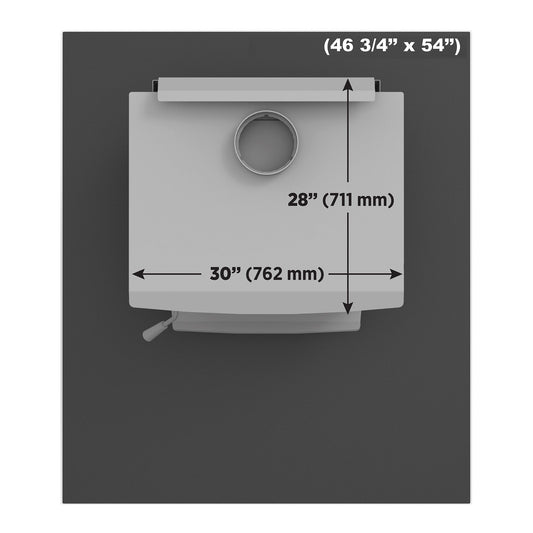
Drolet 54" × 46¾" Tinted Tempered Glass Hearth Pad (10 mm)
Vendor:DroletRegular price $399.00 USD -

 Free Shipping
Drolet 44" × 36" Clear Tempered Glass Hearth Pad (10 mm)
Vendor:DroletRegular price $449.00 USD -
 Free Shipping
Drolet 54" × 54" Corner Modular Hearth Pad System — Black Steel
Vendor:DroletRegular price $489.00 USD -

 Free Shipping
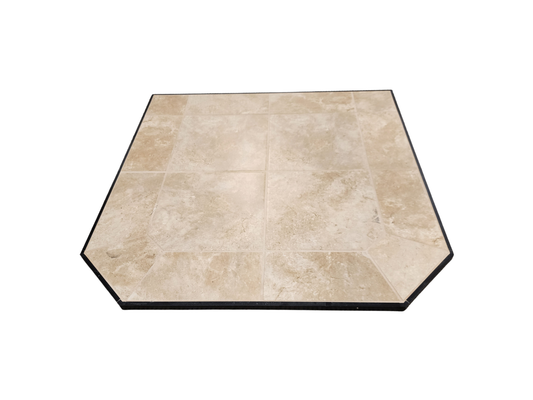
Drolet 60" Corner Modular Hearth Pad System
Vendor:DroletRegular price $525.00 USD -

 Free Shipping
ComfortBilt 36" Hearth Pad — Fits HP21, HP22, HP22N, HP50S, HP61
Vendor:ComfortBiltRegular price $549.00 USD -
 Free Shipping
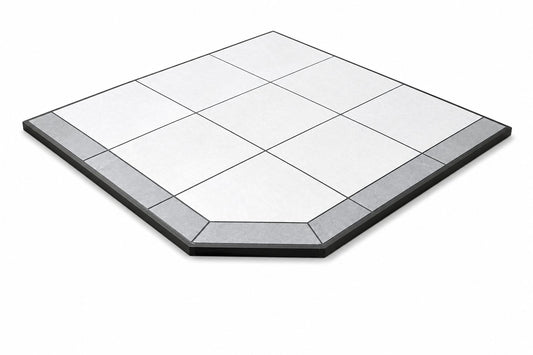
Drolet 20" × 70" Tempered Glass Hearth Pad (10 mm)
Vendor:DroletRegular price $549.00 USD -

 Free Shipping
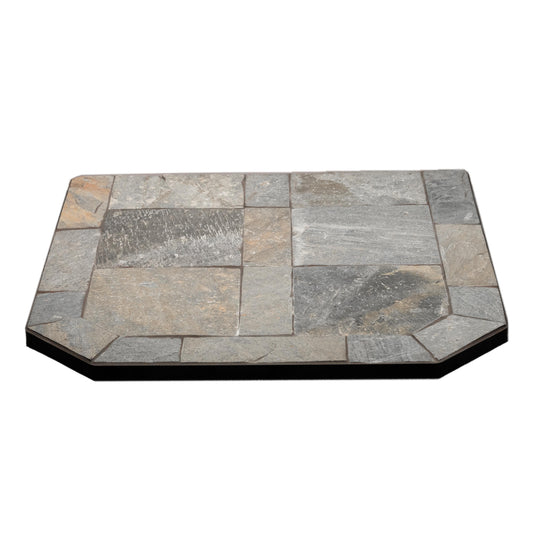
ComfortBilt 40" Corner Hearth Pad — Fits All ComfortBilt Stoves
Vendor:ComfortBiltRegular price $649.00 USD -

 Free Shipping
ComfortBilt Flatwall Hearth Pad
Vendor:ComfortBiltRegular price From $649.00 USD -

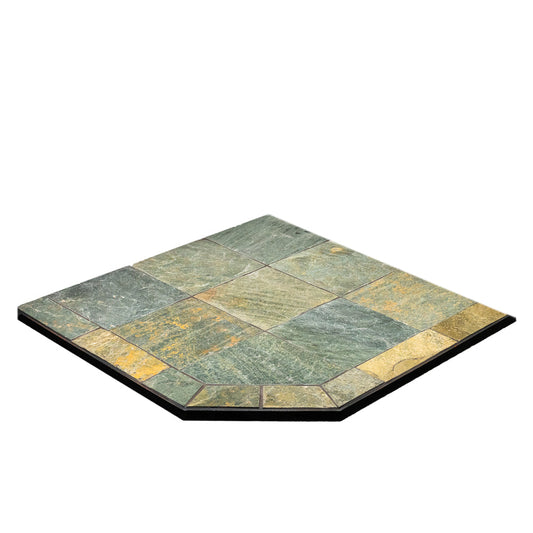 Free Shipping
ComfortBilt Corner Hearth Pad
Vendor:ComfortBiltRegular price From $769.00 USD -

 Free Shipping
Drolet 54" × 46¾" Clear Tempered Glass Hearth Pad (10 mm)
Vendor:DroletRegular price $869.00 USD -
 Free Shipping Over $250
Drolet 41¼" × 44" Black Steel Hearth Pad
Vendor:DroletRegular price $189.00 USDBackorder -

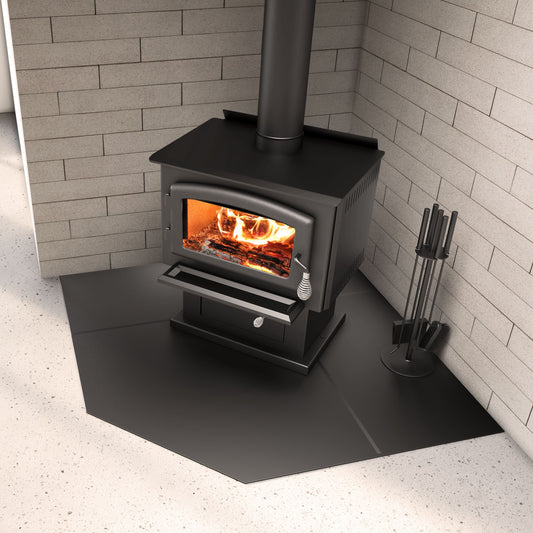 Free Shipping
Drolet 60" Corner Black Steel Hearth Pad
Vendor:DroletRegular price $389.00 USDBackorder


Corner hearth pads for wood stoves
A corner install is the most common reason people end up with the wrong pad. A rectangle pushed into a corner either buries a triangle of coverage against the walls or juts out into the walkway, and in both cases the front clearance is what suffers. A corner-cut pad follows the two walls and puts the material where the door actually opens.
We carry three: the 54" corner in black steel, the 60" corner in black steel for larger fireboxes, and the 60" corner modular system if your manual specifies an R-value rather than ember protection alone. On the ComfortBilt side, the 40" corner pad and the ComfortBilt corner pad are matched to those cabinets.
Metal and glass hearth pads
Most of this range is black steel, which is what the majority of Drolet manuals actually ask for: a continuous non-combustible surface to catch embers during reloading, with no R-value requirement. Steel is thin, sits low, and is the least expensive way to meet that spec. The 41¼" × 44" is the smallest we stock; the 46¾" × 54" covers most mid-size and large stoves.
The alternative nobody expects is the 54" × 46¾" tinted tempered glass pad — 10 mm glass, identical ember protection, and it reads as part of the floor instead of a black rectangle sitting on it. Worth it in a finished room.
If your manual calls for an R-value, the modular system is the one to look at, and the modular extension panel adds coverage without starting over.
Hearth pads for pellet stoves
ComfortBilt pellet stoves use their own matched pads rather than the Drolet sizes. The 36" standard pad fits the HP21, HP22, HP22N, HP50S and HP61. The flatwall pad is for a stove set against a straight wall where you want more presence than the 36".
If you are buying the stove anyway, buy them together — the HP22 combo and HP50S combo each save $249 over separate orders, with the sizing already matched.
How to choose the best hearth pad
There is no single best pad — there is the one your manual requires. Work it in this order: A hearth pad protects the floor under and in front of the stove; the size and the type of protection you need both come from your stove's manual.
- Read section 4 of your stove's manual. It will either require non-combustible floor protection with no R factor, or specify a minimum R-value. Those need different products.
- Check what is under the pad. Steel and glass ember pads are rated to sit on non-combustible flooring. Over carpet or a wood subfloor you need a built-up thermal pad regardless of what the stove asks for.
- Measure, then add clearance. Stove footprint plus the required front and side extension is your minimum size. Front is usually the number people get wrong. Round up.
- Decide corner or flat wall before you order, not after.
On a concrete slab you may need nothing at all — Drolet manuals state no floor protection is required over a non-combustible floor. Our hearth pad guide walks through ember versus thermal pads and the sizing maths in full.
Every pad here ships with No Sales Tax in any state. Call 1-888-914-0022 with your stove model and floor type and we will tell you which pad your manual actually requires before you order.
Sizing and R-value
The pad has to extend the distances the manual specifies in front of the door and around the sides — measure those first, then pick a pad (or a modular pad you can extend) that covers them. Protection type is the other half: some stoves need only ember protection (a non-combustible surface), while others require thermal protection with a minimum R-value that insulates the floor. Every Drolet and Englander wood stove we sell needs ember protection only — no R-value — and the 41¼×44" steel pad meets the published requirement for all of them except the Chic-Choc cookstove. Our hearth pad guide has the model-by-model table.